Everyone – or almost everyone – is taking up running. More than just a ‘fad’, running is establishing itself as a genuine social phenomenon. Why? Because it boosts physical wellbeing, lifts your spirits, encourages you to challenge yourself and allows you to meet lovely people. In short, it makes you happy: life is better with endorphins (and with a bit of muscle soreness!
However, just because everyone is running doesn’t mean it’s easy. Just because the sport seems accessible and the movement natural, it doesn’t mean you become a runner overnight.
At Sidas, we have been supporting both elite athletes in their quest for excellence and enthusiastic beginners in their pursuit of enjoyment for nearly 50 years. Drawing on this half-century of expertise in foot comfort, we have distilled five essential tips to help you start running sustainably, without getting injured or losing motivation.
How far should you run when you’re just starting out? What gear should you choose? How do you run without getting out of breath? How do you avoid injuries and blisters? In this article, we answer all the questions you’re asking yourself as you lace up your trainers for the first time.
‘5 essential tips for taking up running sustainably, without getting injured or losing motivation.’
How do you get started with running?
TIP 1: FOLLOW THE 3 GOLDEN RULES FOR BEGINNING RUNNERS
Starting to run isn’t like assembling a piece of furniture: there’s no instruction manual. Nor is it a matter of following a recipe: you don’t strictly follow predefined steps; you find your own path.
However, there are three golden rules which, if followed, will help you build a sustainable running routine without injury or loss of motivation.
1/ The first key is PROGRESSIVITY. It protects your body and your motivation.
Over-enthusiasm: this is the main mistake we often see in beginner runners! They want to run too fast and for too long, too soon. Your metabolism needs time to adapt to the impact, the strain on your muscles and the cardio-respiratory work. You must therefore increase the frequency, distance and intensity of your training sessions little by little – gently, patiently.
2/ The second golden rule is REGULARITY. It builds endurance.
It goes hand in hand with gradual progression. It’s better to run twice a week all year round than five times over a fortnight before stopping.
3/ The third unchanging pillar is ENJOYMENT, the main driving force for sticking with it over time.
Whatever level of performance you’re aiming for – whether you’re a top athlete or just a casual weekend runner – enjoyment must remain a common factor.
‘The first key is PROGRESSIVITY. It protects your body and your motivation.’
‘You must therefore increase the frequency, distance and intensity of your training sessions little by little – gently, patiently.’
‘The second golden rule is CONSISTENCY. It builds endurance.’
How many times a week should you run when starting out? What distance should you run when you’re new to running?
TIP 2: RUN 2 OR 3 TIMES A WEEK, FOR BETWEEN 20 MINUTES AND 1 HOUR
For a beginner runner, the aim in the first few weeks isn’t performance. The goal is to build a solid foundation. Forget about mind-boggling times and impressive distances. Focus on finding the right balance: run enough to make progress, but not too much so you can still enjoy it and avoid injuries.
To do this, two to three sessions a week are enough to start with. For example, your weekly plan could look like this:
- Tuesday: light jog
- Thursday: light jog
- Weekend: slightly longer run or a run in the countryside
This training frequency helps you build a habit whilst giving your body time to recover. Rest days are essential, as this is when your body processes the effort and gets stronger.
When you first start running, we also recommend counting in minutes rather than kilometres. In other words, focus on the duration of your run rather than the distance covered. Initial light jogs of 20 to 40 minutes are ideal for getting started. We even advise you to finish your session feeling as though you still have energy to spare!
‘Two to three sessions a week are more than enough to start with.’
‘Count in minutes rather than kilometres. In other words, focus on the duration of your run rather than the distance covered.’
How can you run without getting out of breath?
TIP 3: RUNNING WELL DOESN’T MEAN RUNNING FAST
Contrary to popular belief, running well doesn’t mean running fast: it means running in a fluid, relaxed and sustainable manner! When you start running, you therefore need to find your rhythm and learn to run slowly. Much more slowly than most beginners imagine.
Getting out of breath is a great indicator of whether or not you’re running at the right pace, and therefore within the right intensity zone. If your breathing is ragged, you’re running too fast, and consequently, the training isn’t doing you any good.
- Start off deliberately very slowly on your first few strides.
- Breathe deeply and maintain a relaxed posture as much as possible
- Opt for rolling terrain to begin with.
- Run with a partner, as the ability to hold a conversation remains an excellent guide.
‘Shortness of breath is a great indicator of whether or not you are running at the right pace.’
‘Run with a partner, as the ability to hold a conversation remains an excellent guide.’
What gear should you choose when starting out with running?
TIP 4: CHOOSE YOUR SHOES WISELY, BUT ALSO YOUR INSOLES AND SOCKS
Choosing the right gear is a crucial step when you’re starting out with running. By selecting equipment suited to your needs – without giving in to marketing hype or your aesthetic preferences – you’re giving yourself the best chance of making running a lasting passion. We’ve also put together three detailed guides to help you buy the running gear you need: a buying guide for running shoes, a buying guide for the best technical socks and a buying guide on the benefits of Sidas running insoles.
1/ THE RIGHT RUNNING SHOES
The choice of shoes depends on: your stride, your body type, the terrain you run on and your performance goals.
Finding a comfortable and suitable shoe should be your number one priority when you start running. To find the perfect fit, we encourage you to visit one of our partner shops to benefit from the advice of an expert whose job is to help you find the right gear.
2/ THE BEST TECHNICAL SOCKS
At Sidas, with fifty years’ expertise in foot comfort for athletes, we have developed a range of technical running socks acclaimed by the world’s top runners.
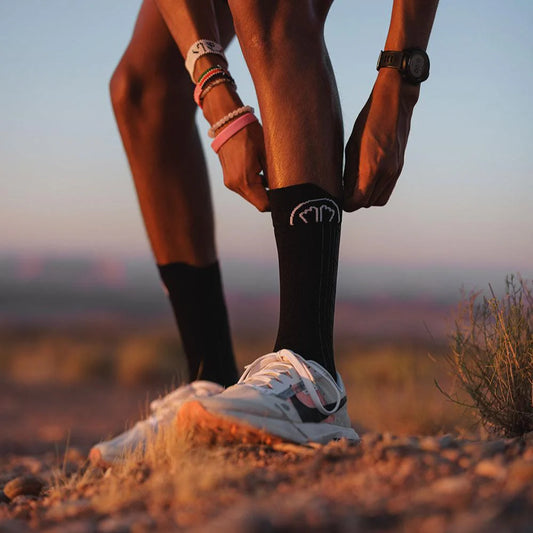
Often underestimated by runners, socks actually play a major role, as they are responsible for moisture management and reducing friction. This is why we recommend choosing technical, thin and lightweight models that offer maximum breathability as well as reinforcement in the areas of the foot under the most stress (heel, forefoot).
3/ RUNNING INSOLES: THE INVISIBLE ALLY
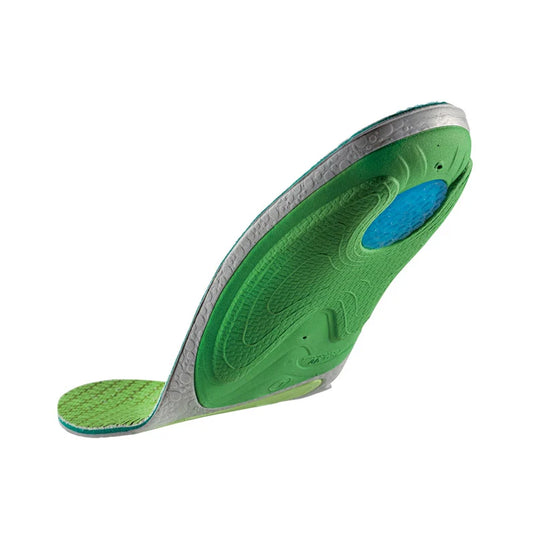
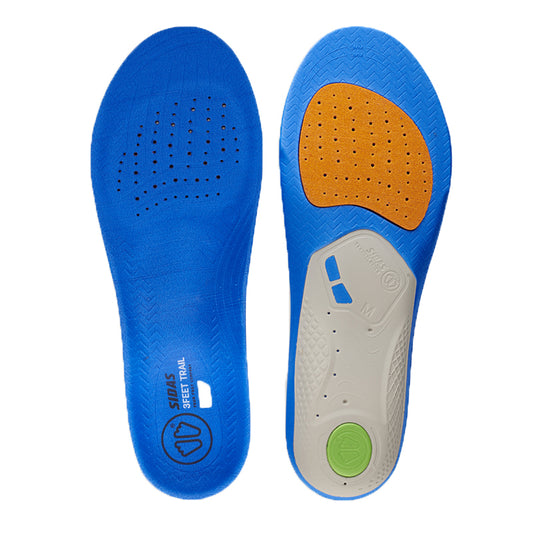
Hidden away inside the running shoe, it’s hard to appreciate the importance of the insole. Yet this piece of kit, in which we have become one of the world leaders, is of fundamental importance.
It provides optimal support for your arch whilst evenly distributing the pressure points across your foot with every stride. The running insole is the beginner runner’s invisible ally as it aids propulsion, increases cushioning and improves stability.
“Often underestimated by runners, socks actually play a major role in foot comfort.”
“The insole is the beginner runner’s invisible ally as it aids propulsion, increases cushioning and improves stability.”
How can you avoid injuries when starting out with running?
TIP 5: SUITABLE GEAR, REST DAYS & ROUTINES
In running – and even more so for beginner runners – injuries occur when:
- The workload increases too quickly. In other words, when you subject your body to a training frequency, distance or intensity it isn’t yet ready for.
- Recovery is insufficient. Hence the need to include rest days between your first sessions.
- The equipment isn’t suitable. This is why the choice of running shoes, socks and insoles is so crucial.
To avoid this, we recommend that you:
- Follow the principle of progression. By gradually increasing the length of your runs.
- Incorporate strength training, even light. Your body – particularly your core muscles – will then be better able to cope with the impacts of running.
- Vary the terrain. On some runs, opting for soft trail-type terrain rather than tarmac can be beneficial.
- Listen to your body’s signals of fatigue. Know when to ease off, particularly when your personal or professional life becomes more demanding.
- Combine these early steps with a healthier lifestyle, centred on good habits that improve overall health: sleep well, eat well, stay well-hydrated...
SPECIFIC CASE: HOW TO AVOID BLISTERS?
Blisters are one of the most common discomforts for beginner runners. Possible causes? Repeated rubbing, moisture trapped in your socks or – once again – unsuitable gear.
To avoid them and ensure your feet stay comfortable in the long term, we recommend:
- Opt for technical running socks with excellent breathability to effectively wick away sweat.
- Keep your feet as dry as possible.
- Use specialised running insoles to stabilise your feet inside your shoes, thereby preventing micro-friction.
- Ensure your shoes fit properly, in terms of size, width and lacing.
‘Blisters are among the most common discomforts for beginner runners.’
‘Opt for technical socks with excellent breathability to effectively wick away sweat.’
You’ve reached the ‘finish line’ of this article: your first finish line and, we hope, the first of many! You now have all the advice you need to run for longer, more easily and with greater enjoyment.